
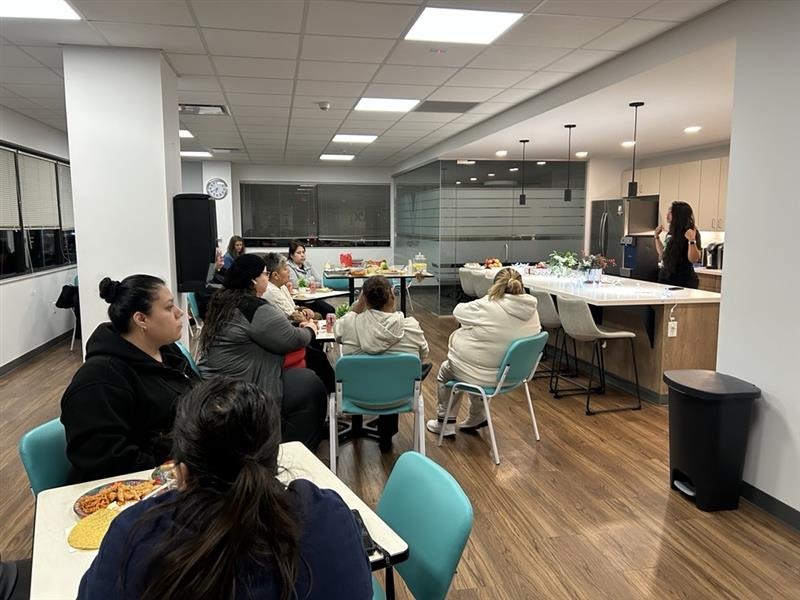
Description: Talia Heredia facilitates a Mediterranean salad cooking lesson for Food 4 Life program participants | Photo credit: Vibrant Health
In Kansas City, a group of people gather around a table learning how to prepare a meal together at Vibrant Health Community Health Center.
One participant shares how they tried a new way of cooking with apples, recreating a sweet bread recipe they had learned in a previous class, using almond flour and adjusting it to better support their health. Small changes like these are helping participants rethink how they prepare everyday meals for themselves and their families.
Moments like these are at the heart of Vibrant Health’s Food 4 Life program, where food, education, and support come together to help patients manage chronic conditions like diabetes and hypertension.
What happens during the group cooking classes is only part of the story. The real impact takes shape in the days between, when patients return home with knowledge, support and home delivered ingredients to help them incorporate nutritious food into their regular routines.
At Vibrant Health, that connection between care and daily life is intentional. As a community health center serving more than 20,000 patients across Kansas City, Vibrant Health provides integrated medical, dental, and behavioral health services with a focus on reducing health disparities and expanding access to care.
The Food 4 Life program reflects the community it serves. Participants have been predominantly Hispanic and many are managing chronic conditions while navigating barriers to consistent access to healthy food and care.
Patients are identified through their care teams, often based on indicators like elevated A1C levels, and invited to join a cohort. Over several months, they participate in monthly classes focused on nutrition, chronic disease management, and practical cooking skills that can be applied at home.
Talia Heredia, a community health worker at Vibrant Health, leads these sessions. Her role goes beyond education. She stays connected with participants between classes, sharing recipes, answering questions, and helping them navigate how to use the food they receive each week.
For many patients, the challenge is not just knowing what to eat. It is having consistent access to the right ingredients and the ability to get them home.
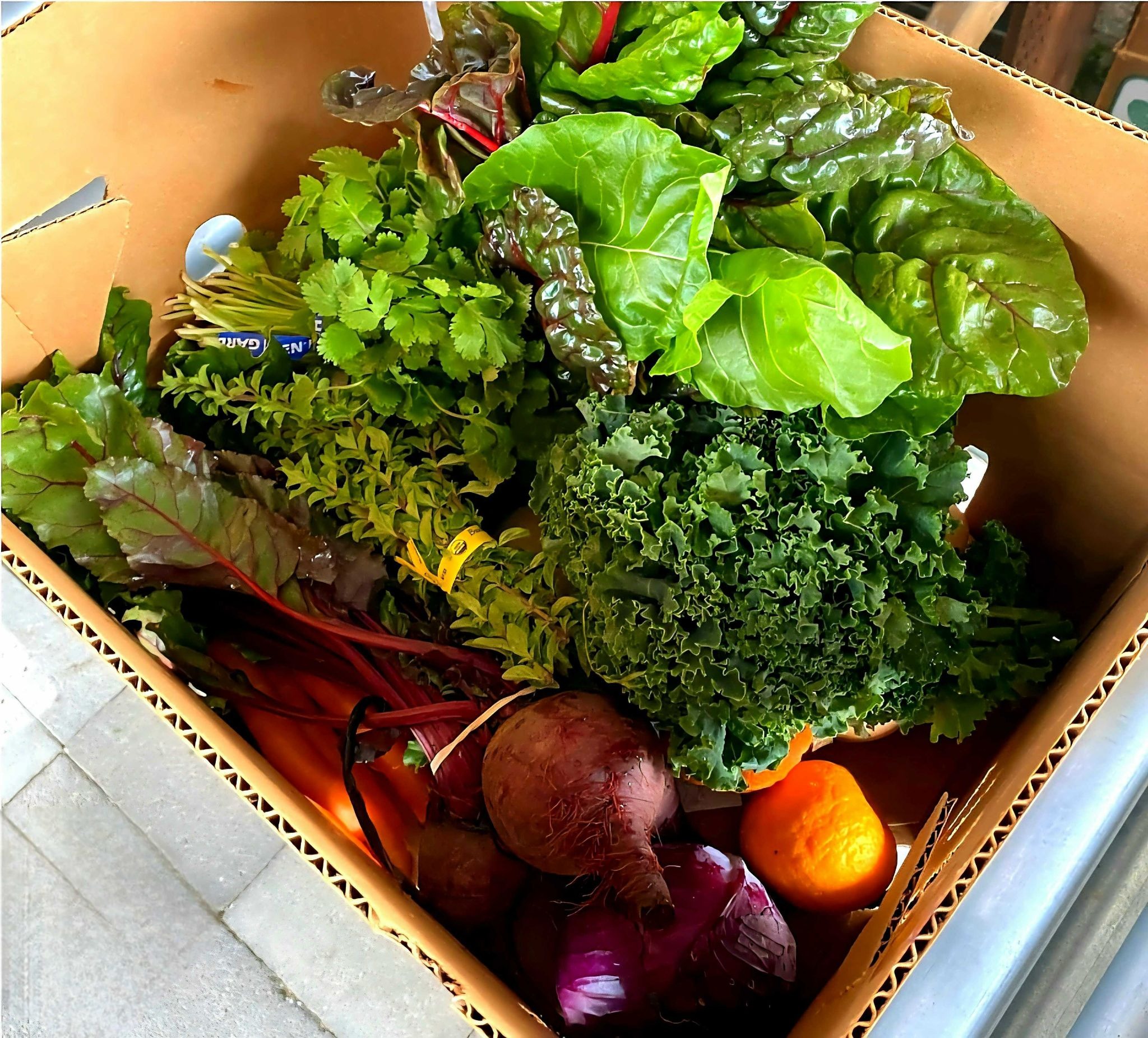
Weekly food delivery addresses that directly. With ingredients arriving at their doorstep, patients are able to cook the meals discussed in class, try new foods in their own kitchens, and repeat those choices week after week.
Talia sees that shift clearly.
“They’re not just getting the food,” she said. “They’re learning what to do with it. Someone might get mushrooms and say they’ve never used them before. Then they try them, learn why they’re good for them, and start adding them into meals at home.”
Talia receives the same food box as participants, which allows her to plan recipes and demonstrations based on the ingredients people actually have in their kitchens, increasing the likelihood that patients use the knowledge they gain during group sessions.
The idea of integrating food into care wasn’t new for Vibrant Health when this program started.
Through participation in a regional effort led by the Sunflower Foundation, the health care center explored different approaches to Food as Medicine programming. The potential was clear, but translating that into a sustainable program required more than interest.
As Valorie Coffland, MA, Director of Grants & Program Development, explained, the missing piece was not vision, it was capacity.
“We were really interested in Food as Medicine and what it could look like here,” she said. “But when we discussed what it would take to actually incorporate a food box delivery for participants, we knew we didn’t have the resources to do that on our own.”
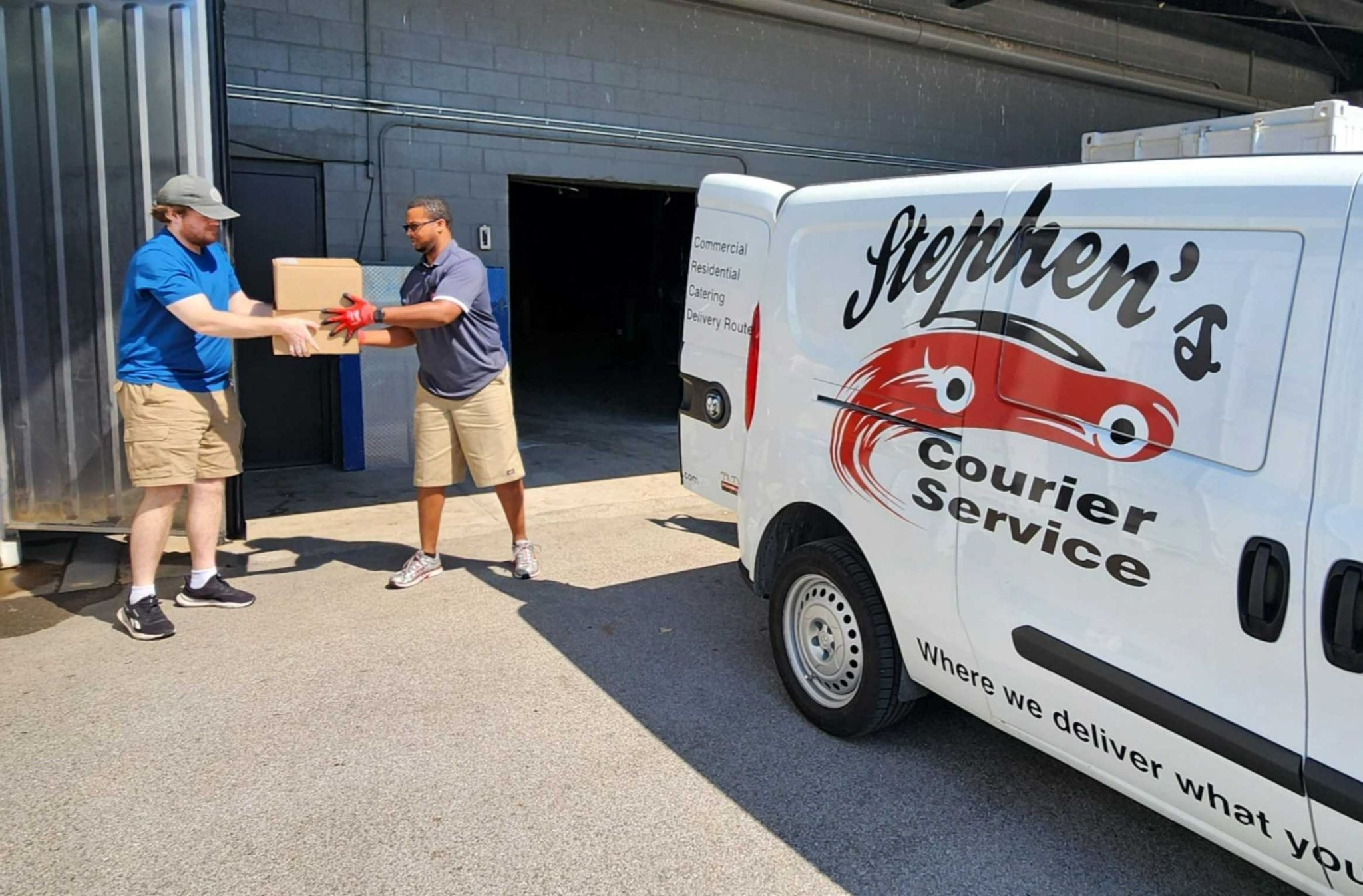
About two years later, that changed. Food Connect approached Vibrant Health with a model designed to handle the logistics of home delivery. With support from GreenLight Fund Kansas City, the program was introduced in a way that prioritized local relationships and alignment with community needs.
Programs like this do not take shape overnight. Expanding into a new city requires trust, strong partnerships, and a deep understanding of local systems. GreenLight Fund played a key role in building those connections early, helping ensure that the model could be integrated into the community in a meaningful way.
Today, Food 4 Life is operating as a pilot program, currently in its second cohort, with plans to continue building on what has been learned in a third.
Each week, food boxes are assembled through the Kansas City Food Hub, sourcing from local farmers and producers. The food is fresh, nutrient-dense, and reflective of what participants can find in their own communities, making it easier to continue these habits beyond the program.
Combined with ongoing education and support, that consistency is leading to positive health outcomes.
“I thought that just not eating sugar was enough to lower my A1C,” one participant shared. “I didn’t know that stress, not sleeping well, not being active, and even my emotions could affect my diabetes. Now I understand my health better and feel more in control.”
From a program assessment completed by Vibrant Health, 67 percent of participants lowered their A1C levels, with an average decrease of approximately 7 percent across the pilot’s first cohort. Participants also reported feeling a greater level of food security for their families over the course of the 9 month program.
Beyond the data, participants connected with each other through a group chat where they shared pictures of meals they prepared, exchanged recipes, and encouraged one another. What began as a clinical program became a source of community connection and ongoing support.
“Another important impact I noticed is that many patients started bringing their partners or children to the classes,” said Talia. “This created a space where the whole family could learn together. It helped build support at home and made it easier for patients to stay consistent with healthy habits.”
Over time, these changes take hold in a holistically designed program like this one. Participants begin purchasing foods they once avoided. Cooking becomes more approachable. Managing a chronic condition feels less overwhelming and more within their control.
Food 4 Life offers a clear example of what becomes possible when healthcare is designed to fit into people’s lives.
For Vibrant Health, integrating home-delivered food into care is what makes this level of support achievable. It ensures that patients not only receive guidance, but also have the resources to apply it consistently.
As this pilot continues to evolve, it highlights an important lesson: when care includes both knowledge and access, it creates the conditions for lasting change.
This story was developed with input and permission from Talia Heredia and Valorie Coffland at Vibrant Health.
4/22/2026


Get the latest updates on food rescue efforts, community impact, and ways to get involved


.webp)

