
Description: Volunteers with Ronald McDonald house after packing food boxes with farm fresh produce. / Photo credit: St Christopher’s Foundation
In a series of virtual meetings, community leaders from across Philadelphia share what they are seeing in their neighborhoods.
They know which families need food. They know who is struggling and who is being left out of existing systems. What they do not have is a consistent way to get food to those households.
Valerie Erwin, Farm to Families Program Director at St. Christopher’s Foundation for Children, joins these conversations with a different piece of the puzzle. She has access to fresh food and a way to source more. A delivery partner has already offered to help get it to people’s homes.
What is still needed is a connection to the families themselves.
“I kept saying, we have access to produce, we just need to know who needs it,” she recalled.
Over the course of a few meetings, Valerie continues to share the same message. Soon, organizations across the city begin to respond, each one ready to connect families with the support and resources they need.
This was the spring of 2020, when the pandemic disrupted daily life and community leaders came together to find ways to respond.
Before this moment, Valerie’s work looked a little different.
The Farm to Families program was built around a simple idea: access to healthy food is foundational to a child’s development, yet often out of reach in many Philadelphia neighborhoods. The program provides families with low-cost, high-quality produce and staples to support healthy growth, reduce the risk of chronic health issues, and create a stronger foundation for children’s development.
At the time, the program operated through a central pickup model. Each week, hundreds of families, at times up to 700, came to a designated community site to receive food boxes, paying a small fee to participate.
Behind the scenes, making that possible required constant coordination. Valerie and her team worked closely with local food aggregators, including Lancaster Farm Fresh Cooperative and the Carversville Farm Foundation, to source fresh produce and pantry staples. Once the food arrived, volunteers at Ronald McDonald House packed the boxes, organizing them for distribution.
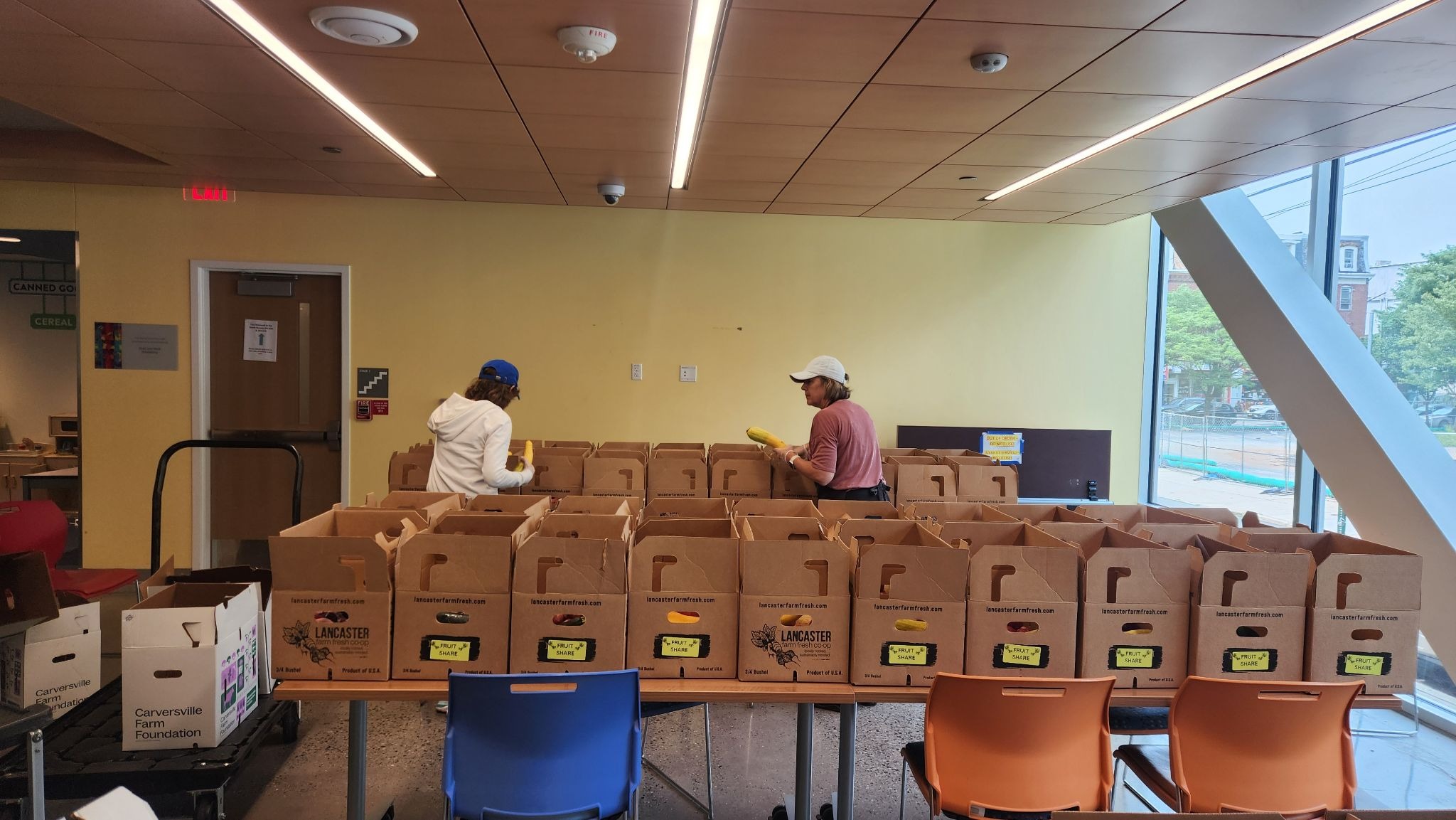
It was a system that relied on many moving parts working in sync. It worked for many families, but it also depended on one key assumption: people had to be able to get to the central pickup location to participate.
As the meetings continued in those early weeks of the pandemic, the urgency of the moment became clearer.
For Valerie, the turning point came during one of those virtual meetings, when the question of how to move the food was answered.
“We had one van. We couldn’t do delivery at that scale,” she said. “What we needed was someone who already knew how to do that. Megha from Food Connect spoke up on one of the calls and said they could help with delivery, and that changed everything.”
With a clear path for delivery, the possibility of reaching the households that needed food most was no longer out of reach.
Some of the local organizations on the calls were in close relationship with families who were not connected to formal systems or who faced multiple access barriers. They knew exactly who needed food.
What followed was a decentralized model that relied on those relationships. Community organizations identified families. Valerie and her team sourced the food. Volunteers packed boxes. Food Connect delivered them directly to people’s homes.
“It was a real lesson in community activism,” Valerie said. “Everyone brought what they had.”
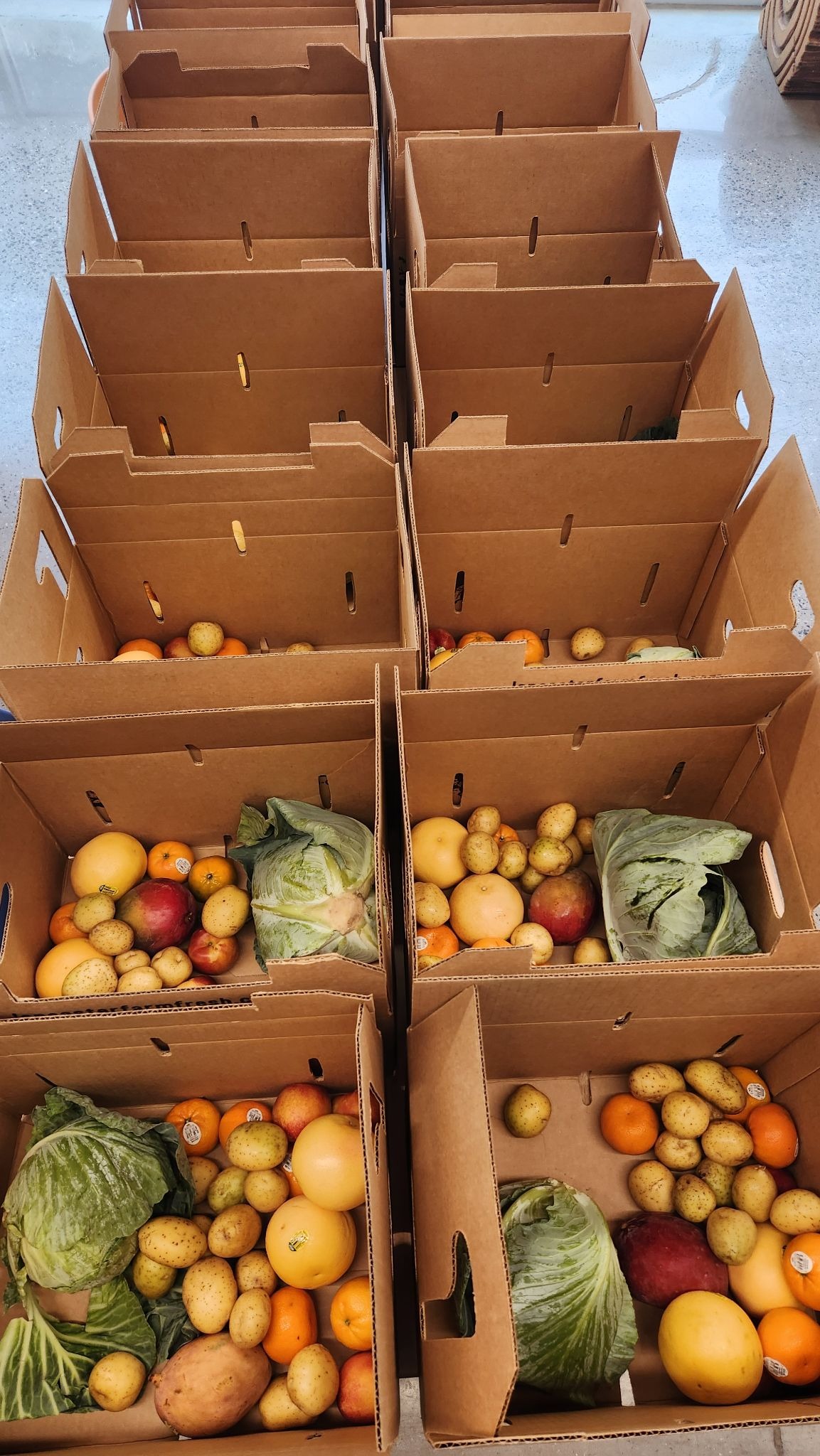
As the immediate crisis eased, Valerie and her colleagues began to think about the importance of continuing home-delivery as part of their ongoing programming.
The rapid shift during the pandemic revealed something that was not fully understood before. Transportation was a significant barrier for many families, and delivery made it possible to reach households that had not been able to access food through the earlier pickup model. Rather than return to the way things had been, the team chose to build on what they had learned.
The goal was to create a program that was free, reliable, and designed around the realities households were navigating. For families with young children, especially those connected to St. Christopher’s programs, accessing food needed to fit into already complex schedules.
Since the pandemic, home delivery has remained a consistent component of the Farm to Families program. Through the Community Oral Health Initiative, families are identified through screenings and referrals within a network of care providers. Health navigators and program staff help connect families to the program without requiring income thresholds or complicated enrollment steps.
Families receive regular deliveries of fresh food without needing to rearrange their schedules or navigate transportation challenges. It creates a level of consistency and dependability that Valerie says makes a huge difference.
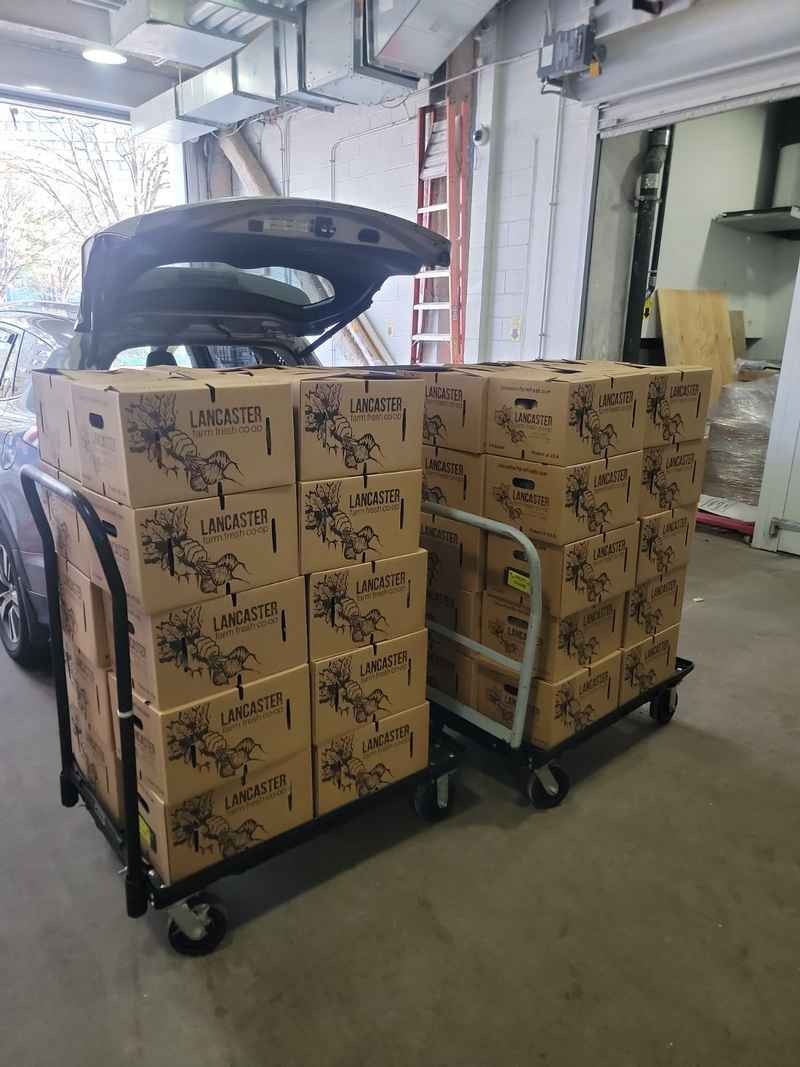
“Delivery is a special kind of service,” said Valerie. “Amazon has made it seem easy, but it’s not when it’s this specific, local, and tailored.”
From Valerie’s perspective, the strength of the model is not just that delivery happens, but how it happens.
Food Connect’s approach includes route coordination, real-time communication, and a system for sharing updates when something changes. If a family has moved or is not home, that information is quickly relayed back, allowing the program to stay responsive.
Because St. Christopher’s staff does not interact directly with families in the same way as they did with the pickup model, that communication loop is essential. It allows the program to function smoothly while still giving families the flexibility they need.
The consistency of that system has made it possible to sustain the program over time and to continue reaching families who might otherwise be missed.
As the program took shape, it began to influence other efforts across the city.
What began as a rapid response to the impacts of the pandemic required a level of reinvention across organizations, including Food Connect’s pivot from food rescue to home delivery.
“That response became a proof of concept,” said Valerie. “Once we saw what was possible, it was something you wanted to tell other people about. You wanted other programs to be able to do home-delivery too.”
Valerie shared the approach with partners, including Temple University and other local organizations exploring how to incorporate home-delivery into their own programs. The model demonstrated the value of including and collaborating with partners who specialized in sourcing, packing, and delivering.
The same principles were applied in other programs facilitated by St. Christopher’s.
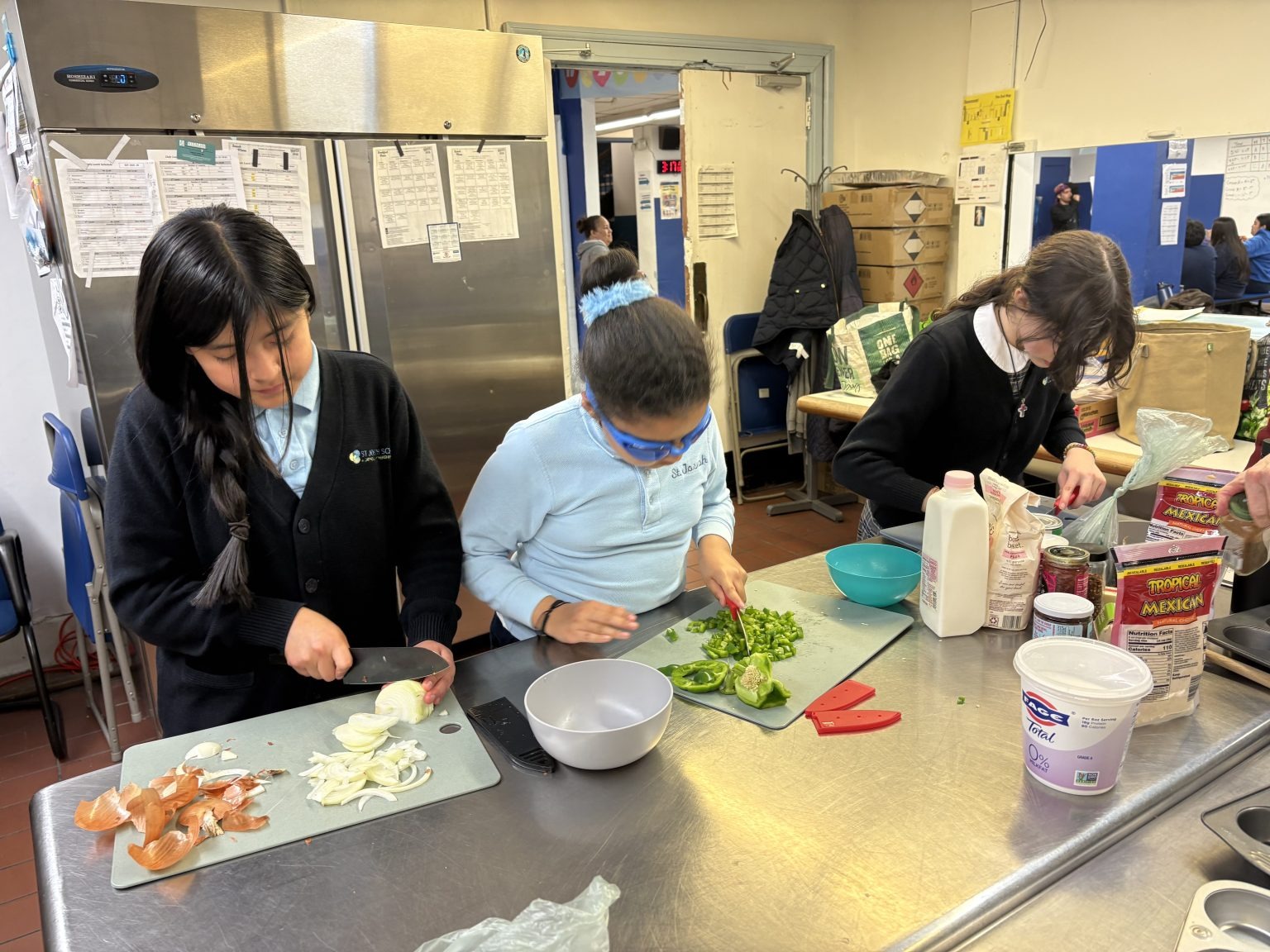
The My Family Kitchen program was founded in 2008 by Program Director Maureen Fitzgerald. In this volunteer-led program, students participate in guided cooking classes twice a week, preparing and sharing meals together. Behind the scenes, volunteers handle everything that makes each session possible, from sourcing ingredients and setting up to guiding the cooking and cleaning up.
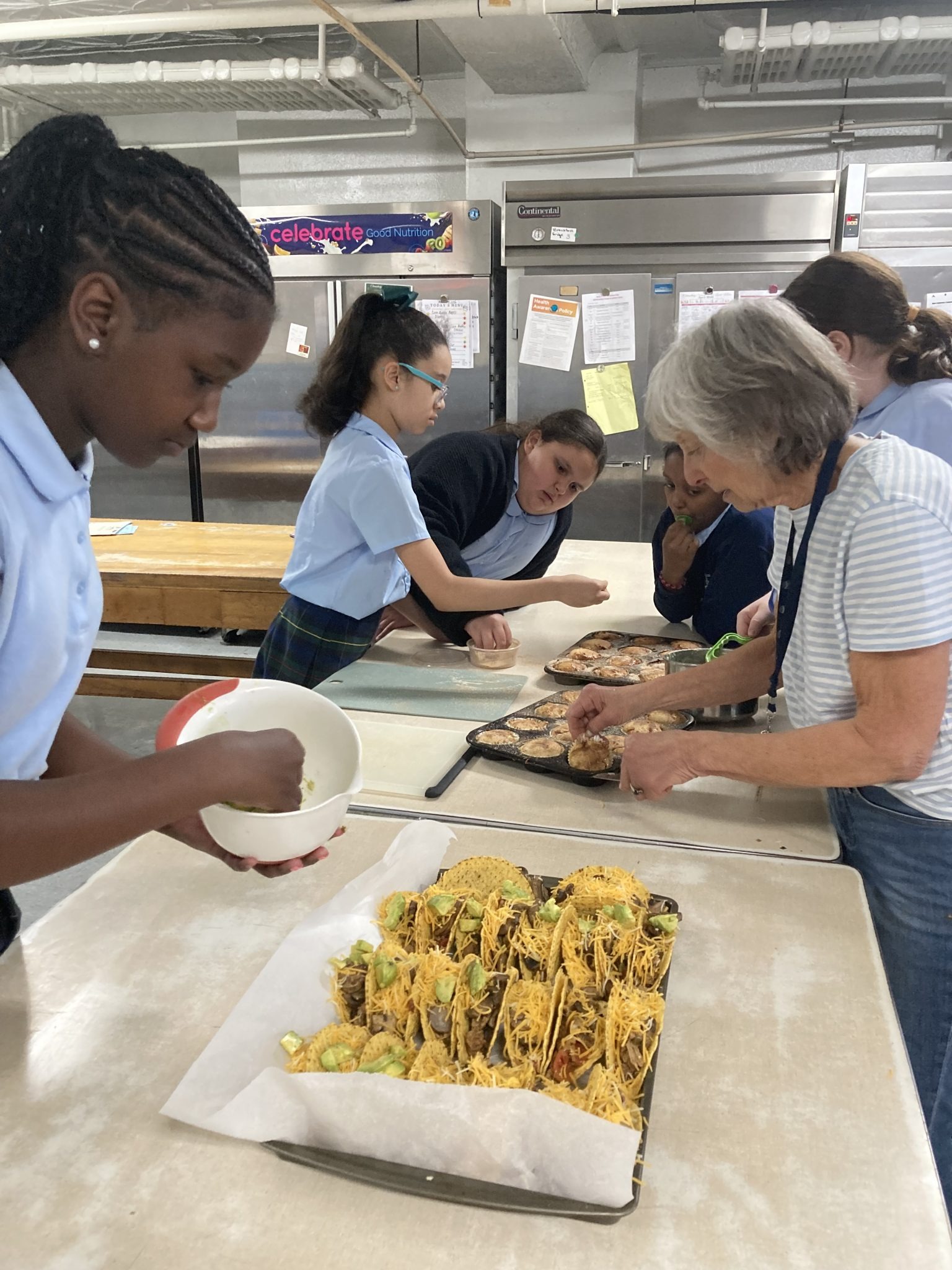
Over time, it became clear that sourcing and transporting ingredients created barriers for volunteers, requiring additional time and coordination outside the classroom.
To address this, Program Coordinator Laxmisupriya “Supriya” Avadhanula restructured the model so volunteers no longer needed to manage those responsibilities. Supriya now coordinates logistics across partners, including New Kensington Community Development Corporation, which packs the food, and Food Connect, which delivers it to schools.
With packing and delivery handled by partners, volunteers are able to focus on teaching and working with students. The change has made the program easier to sustain and opened the door for new volunteers to participate.
The need for this work continues to evolve.
In the fall of last year, delays in SNAP benefits created renewed uncertainty for many families. Once again, community organizations found themselves in conversation, sharing what they were hearing and working quickly to respond to immediate needs.
For Valerie, the moment felt familiar. The same questions resurfaced: who needs support, and how do we reach them in time?
At the same time, long-standing federal support is also shifting in unprecedented ways. Extreme cuts and eligibility restrictions applied to the Supplemental Nutrition Assistance Program (SNAP) and other federally funded food assistance programs are placing additional strain on the systems families rely on. SNAP-Ed, which has funded nutrition education programs like My Family Kitchen for more than 30 years, is set to expire in October 2026, creating new challenges for sustaining this work.
Across the city, efforts are underway to better prepare for these moments. Through the Philadelphia Food and Nutrition Security Task Force, community leaders and partners are working together to share recommendations grounded in lived experience to highlight the importance of investing in both food access programs and the logistics infrastructure required to deliver it.
Local community organizations remain closely connected to these shifts, often responding in real time as conditions change. Their ability to continue supporting families depends on funding, partnerships and thoughtful, human-centered policies.
Moments of urgency will continue to arise, and with them, the need to respond quickly.
For Valerie and her colleagues at St. Christopher’s, the emergency shift to home-delivery spurred them to test new approaches, and work in closer coordination with organizations offering a variety of expertise. Over time, those adjustments became part of a more durable model, one that continues to shape how food reaches families today.
In Philadelphia, community organizations, public agencies, and partners have continued to come together in moments of challenge, sharing what they are seeing and building solutions grounded in that knowledge.
That kind of collaboration creates more than a short-term response. It leads to systems that are better coordinated, more efficient, and more capable of reaching people consistently.
This story was developed with input and permission from Valerie Erwin with St Christopher’s Foundation.
5/5/2026

Get the latest updates on food rescue efforts, community impact, and ways to get involved


.webp)

